The Madlanga Commission of Inquiry · Live public record
The Madlanga Commission, the inquiry the country can’t stop watching.
The Madlanga Commission of Inquiry is South Africa’s judicial commission investigating criminal infiltration, political interference and corruption in the police, prosecution and intelligence services, chaired by Justice Mbuyiseli Madlanga. This archive turns the firehose of testimony - eight to ten hours a day, 181 sitting days - into a public record you can actually read: every hearing day, case, witness and network, cross-referenced.
- 181hearing days recorded
- 5case files reconstructed
- 43people tracked
- 3networks mapped
Counts update as the record grows. Last day added .
Hot right now
What’s new at the Madlanga Commission
On the stand today
Who is testifying at the Madlanga Commission today
Witness to be confirmed
The Commission names each day's witness only once proceedings begin - the schedule is not published in advance. The name, photo and details will appear here as soon as the hearing is under way. In the meantime, browse the witnesses heard so far.
What this is
The complete Madlanga Commission public record
The Madlanga Commission of Inquiry is South Africa’s judicial commission of inquiry into criminality, political interference and corruption in the criminal justice system, chaired by retired Constitutional Court Justice Mbuyiseli Madlanga. This archive is the most complete public record of the Madlanga Commission — we index every Madlanga Commission hearing, ruling and witness so you can follow the latest testimony without watching the live feed.
Use it to track what the Madlanga Commission heard each day, who testified, and what the commission ruled. Start with the latest Madlanga Commission hearings, the case files, the commissioners and evidence leaders, or the frequently asked questions about the Madlanga Commission.
The lead story
Latest Madlanga Commission case file
Case file · IDAC vs Crime Intelligence
The Khumalo arrest and the Mokwele appointment - IDAC's case under the microscope
IDAC charged a Crime Intelligence boss over a civilian's appointment. Sixteen days of testimony left the commission asking what the crime actually was - and by the end the prosecuting authority had withdrawn the case, IDAC's head had resigned, four of her own officials had testified against it, three senior investigators were suspended, and the chairperson had raised shutting the directorate down.
Read the case fileThe people
Latest witnesses before the Madlanga Commission
Madoda Johannes 'Joe Ferrari' Sibanyoni
Taxi owner; president, South African Local and Long Distance Taxi and Bus Organisation
One of the largest operators in the South African minibus taxi industry, and for the past year one of the names this commission has heard about without hearing from. He entered the industry as a driver in 1985, bought his first taxi in 1995, and now runs a fleet of roughly 400 vehicles across Gauteng and Mpumalanga; he is president of the South African Local and Long Distance Taxi and Bus Organisation and a former Santaco provincial chairman and deputy president. Suspended Sergeant Fannie Nkosi told the commission that Sibanyoni was one of a 'group of five' businessmen, and investigators have alleged that the syndicate Crime Intelligence calls the Big Five manipulates police investigations and controls taxi routes through violence and extortion. Sibanyoni rejects that. Testifying under a Rule 10.6 notice on 28 August 2026 (Day 169), he told the commission he was the network's target rather than its member: that gunmen shot him in 2006 and again in August 2022, that the late taxi mogul Jotham 'King Mswazi' Msibi was behind the threat against him, that Msibi's death in January 2024 brought relief, and that he had asked then Police Minister Bheki Cele for an inquiry into a cartel with roots inside the police and been refused. He is the state's first witness in the attempted murder trial arising from the August 2022 shooting, in which Vusimuzi 'Cat' Matlala and four co-accused have pleaded not guilty. Separately, he was arrested on 12 May 2026 and faces extortion and two counts of money laundering over an alleged R2.2 million in protection fees demanded from a mining businessman between 2022 and 2025; he denies those charges. He read his statement into the record without completing his evidence, and the cross-examination set down for 21 September 2026 (Day 177) did not take place: he returned, read a supplementary statement, objected to the commission using data taken off his phone when it was seized in his criminal case, complained that he had been drip-fed more than 2,000 pages of evidence after his own statement was due, denied any improper relationship with police officers, and defended a R145,000 a month security contract with Gubis85 Solutions and the roughly R1 million bakkie that company gave him. Cross-examination was postponed again on 22 September 2026, to a date not yet determined, after his counsel Advocate Mpati Qofa told the chairperson he was booked at the Khampepe Commission. On Day 179, 28 September 2026, the commission put the particulars of that criminal case on its own record for the first time, leading the documentary evidence in the absence of his co-accused Oupa 'Bafana' Sindane: per Sowetan chief evidence leader Advocate Matthew Chaskalson SC characterised the WhatsApp exchanges as 'an extortion racket enforced with threats of violence', and per TimesLIVE and Sowetan the complainant is named as Dr Tengane Thomas Ntuli, who held a South African National Roads Agency contract to upgrade the Moloto road and is said to have been made to pay R100,000 a month from July 2021, with R100,000 withdrawn and handed to Sibanyoni that month. Per Sowetan, The Citizen and Inside Politics the commission also heard that he and Sindane allegedly funded legal fees for men convicted in Mpumalanga taxi killings. He was not in the box for any of it. He answered it the next day. The cross-examination finally ran on Day 180, 29 September 2026: per The Citizen he told the commission the money was an investment, not a levy, describing a joint arrangement in which Ntuli's company held mining rights to a quarry but could not meet the 30 percent local content requirement on the R572 Moloto road upgrade, saying 'I contributed R900,000 to the business and to him' and explaining the 60/40 split as his own 40 percent share. Per IOL and the African News Agency he separated himself from his co-accused on the threatening message, telling Commissioner Advocate Sandile Khumalo SC that 'he [Sindane] was acting on his own' and that 'Ntuli and I had a good relationship, I never sent him any threatening message'. Per IOL and Eyewitness News he explained helping to fund the legal costs of Calvin Gwabo Mahlangu, convicted in a taxi related killing, as a family request, 'his family approached me ... his mother approached me to help'. Per Eyewitness News and The Citizen, Commissioner Advocate Sesi Baloyi SC told him she found it unbelievable that he had taken no interest in a confidential police docket on the alleged Kwaggafontein 20 grouping that names a man he calls his nephew. He returned the next day for a second consecutive day of cross-examination, and Day 181, 30 September 2026, turned from a quarry to a bus company. Per Sowetan and TimesLIVE the commission heard that Putco recorded more than 350 incidents between October 2024 and January 2025 in which taxi operators blocked its buses around KwaNdebele; per The Citizen and IOL it played footage of a January 2024 African National Congress campaign event at which he told President Cyril Ramaphosa and Minister Gwede Mantashe, pressing a demand that local operators get 30 percent of Putco's Mpumalanga routes, 'when you find someone wanting to interfere with the Putco business, you must know it is us. Don't put red tapes.'; per Sowetan and IOL it took him through the night of 27 January 2025, when armed men attacked Putco depots and burned roughly 51 buses, 16 of them at the Moloto depot in under ten minutes on closed circuit footage; and per Inside Politics and Eyewitness News through a message he sent about acquiring buses some 36 hours later and the unsolicited offer that Taxi Choice, the South African National Taxi Council's business arm which he chairs, made to buy Putco on 25 February 2025. Per Eyewitness News he rejected the sequence as a whole, 'I differ. I differ 100% with your findings', said the taxis in the commission's video carried Mpumalanga plates and were not his association's, and per SABC News said Taxi Choice's interest in Putco was years old. Per SABC News, when he suggested the questioning had become personal, the chairperson refused the suggestion and said there was nothing wrong with the evidence leader or the commission's investigators consulting Putco. Nobody has been charged on this record over the Putco depot fires and he denies any involvement in them. Per Eyewitness News he completed his evidence and was excused at the end of that day, closing four sitting days in the box, and his closing remarks thanked the commissioners, his legal team and his family while raising what he described as the negative narratives about him; per Business Day his denial of the fires was 'I have mentioned that I was speaking on behalf of the community. There you see the community burning buses; it's not me.', and per the Daily Maverick he said the Putco acquisition had been dropped, 'we decided not to pursue the matter'. His evidence closed the commission's public hearings before a recess: it does not sit on 2 October, sits in camera for the two weeks from 5 October, and resumes in public on 9 November. Nothing on this page is a finding, every allegation both by and against him is untested, and everyone named is presumed innocent.
Professor Somadoda Fikeni
Chairperson, Public Service Commission
The chairperson of the Public Service Commission, the Chapter 10 body that monitors and investigates public administration, and the witness who told the commission that South Africa's problem is not policy but the will to implement it. On 18 September 2026, two days after the President signed a new Public Service Commission Act into law, Professor Somadoda Fikeni described a 'political economy of inefficiency', said vetting is often not taken seriously, backed the vetting of frontline officials across the criminal justice system, and argued that officials at the bottom of the most unequal society in the world are the most vulnerable to being enticed. His was systems evidence; he made no allegation against any named person.
Makgothi Samuel Thobakgale
National Commissioner, Department of Correctional Services
The head of South Africa's prisons service, and the witness who took the commission inside them. On 17 September 2026, the commission's first anniversary, Makgothi Samuel Thobakgale described the Number gangs and the street gangs that feed them, officials groomed with small favours, members whose role is to eliminate witnesses, and an inmate who says officers told him to escape from Rooigrond Maximum Correctional Centre or be killed. He also told the commission that Thabo Bester had repeatedly tried to see him alone. He gave evidence as the head of an institution describing its own weaknesses; he is not accused of wrongdoing.
Laura Pop
Senior financial sector specialist, World Bank
The commission's first witness on what to actually do about everything it has heard. Laura Pop is a senior financial sector specialist at the World Bank who works on anti-corruption, asset recovery and financial disclosure alongside the United Nations Office on Drugs and Crime, and who has worked in more than twenty countries including South Africa. She gave expert evidence on Day 174, 16 September 2026, at the Bridgette Mabandla Justice College in Pretoria. Her proposition, per TimesLIVE, was that the tools a state already has will not necessarily clear infiltration out of itself: 'Criminal investigations or disciplinary investigations use some of the bodies that are already there, and what happens is that some countries have seen that these measures are not sufficient.' She gave two reasons. The bodies that run disciplinary hearings can themselves be captured, and a single criminal case against a single compromised official can take years. She took the panel through what Kenya, Moldova, Ukraine and Albania did instead, and recommended for South Africa a once-off, legally entrenched integrity evaluation of senior and high-risk criminal justice officials, independent, tightly defined and hedged with strong legal safeguards. Most of her evidence went to verification rather than declaration: per Eyewitness News, any such body 'must have the power to compel the production of financial and other necessary records from third-party repositories without relying on the evaluated individual to produce them voluntarily', and must be able to reach the assets of family members and third parties within the limits needed to establish unjustified wealth. She recommended working with the South African Revenue Service, said anyone refusing an assessment should face dismissal, and, per SABC News, put the limits of remedial training bluntly: 'You can't train people who don't have integrity.' This is expert evidence about systems. It makes no allegation against any person.
The objects
Latest exhibits from the record

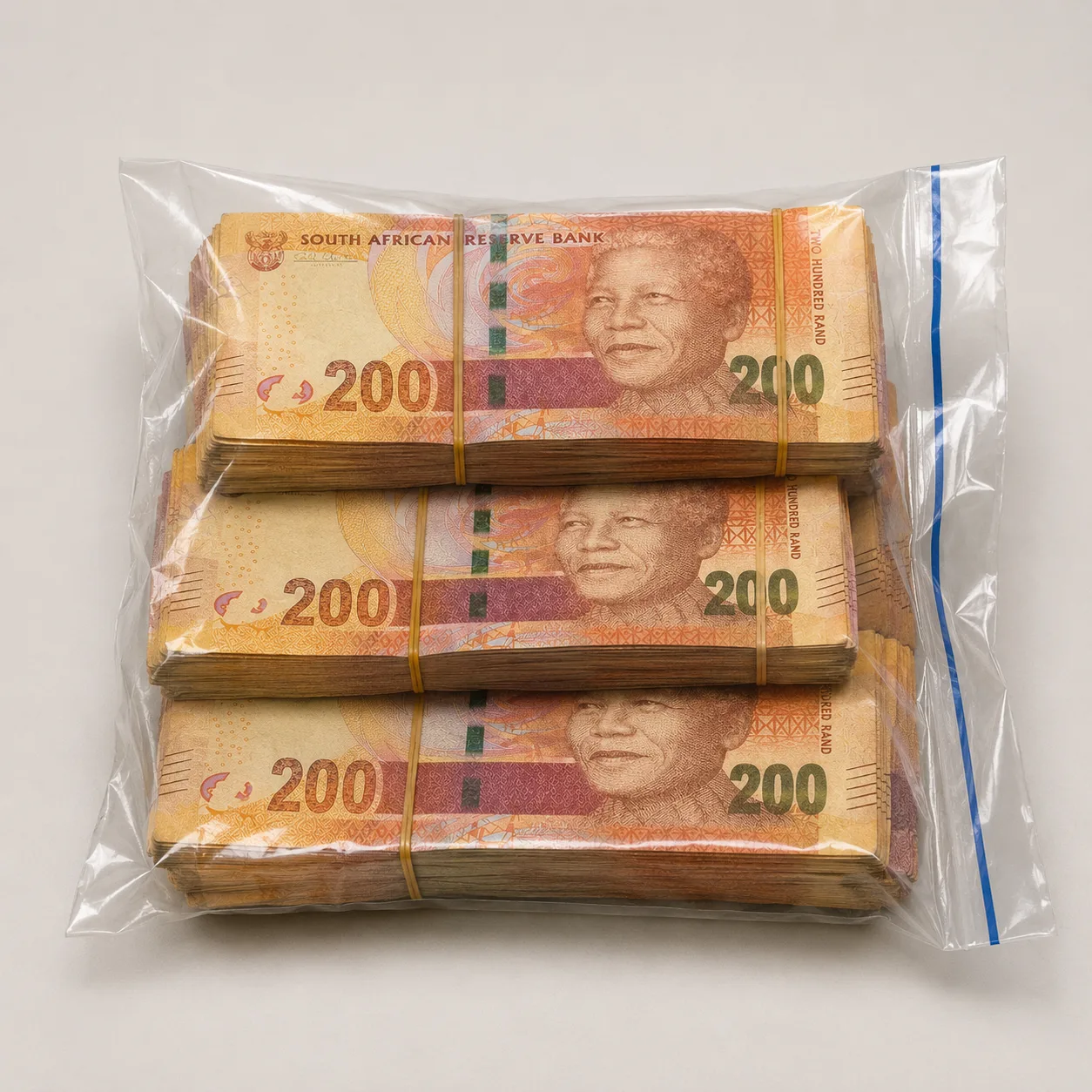




The spine
Recent Madlanga Commission hearings
- 181
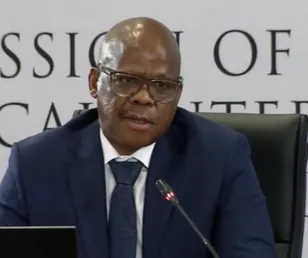
Madoda Johannes 'Joe Ferrari' Sibanyoni
The last public sitting of the commission's evidence before it goes behind closed doors, and it turned from a quarry to a bus company. Madoda 'Joe Ferrari' Sibanyoni returned for a second day of cross-examination and chief evidence leader Advocate Matthew Chaskalson SC put a sequence to him rather than a single allegation: that he told the President of the country his people would be behind any interference with Putco, that Putco was then interfered with on a scale the company counted, that its depots were burned, and that a body he chairs offered to buy it. Per Sowetan and TimesLIVE the commission heard that Putco recorded more than 350 incidents between October 2024 and January 2025 in which taxi operators blocked its buses from working around KwaNdebele. Per The Citizen and IOL the commission played footage of a January 2024 African National Congress campaign event at which Sibanyoni told President Cyril Ramaphosa and Minister Gwede Mantashe, in support of a demand that local operators get 30 percent of Putco's Mpumalanga routes, 'when you find someone wanting to interfere with the Putco business, you must know it is us. Don't put red tapes.' Per Sowetan and Inside Politics the commission then took him through the night of 27 January 2025, when armed men took Putco's depots and burned roughly 51 buses, 16 of them at the Moloto depot in under ten minutes on closed circuit footage; through a message he sent about acquiring buses some 36 hours later; and through the unsolicited offer that Taxi Choice, the business arm of the South African National Taxi Council which he chairs, made to buy Putco on 25 February 2025. Per Eyewitness News and Inside Politics he rejected the whole construction: 'I differ. I differ 100% with your findings.' He said the taxis in the commission's video carried Mpumalanga plates and were not his association's, that his approach to the President concerned 'legitimate public and community matters', and that Taxi Choice's interest in Putco long predated any of it. When he suggested the questioning about Putco had become personal, per SABC News the chairperson Justice Mbuyiseli Madlanga refused the suggestion and said there was nothing wrong with the evidence leader or the commission's investigators consulting Putco. Nothing on this page is a finding. No one has been charged over the depot fires on this record, Sibanyoni denies any involvement in them, his evidence and every allegation put to him are untested, and he and everyone named are presumed innocent.
- 180
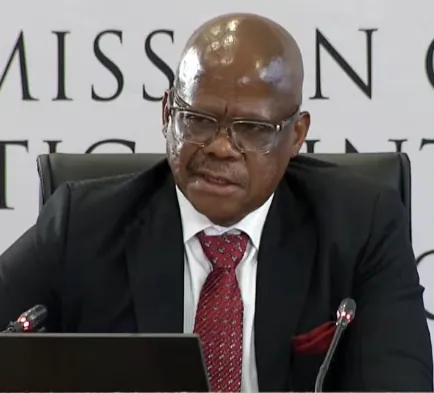
Madoda Johannes 'Joe Ferrari' Sibanyoni
A day after the commission read Oupa 'Bafana' Sindane's WhatsApp messages into a public record he was not in the room to answer, the man on the other end of most of them came back to the witness box to answer them for himself. Madoda 'Joe Ferrari' Sibanyoni, president of the South African Local and Long Distance Taxi and Bus Organisation, resumed a cross-examination that had had no date since 21 September, and chief evidence leader Advocate Matthew Chaskalson SC put the alleged extortion of Dr Tengane Thomas Ntuli to him directly. His answer was that there was a business, not a racket: per The Citizen he told the commission he put R900,000 into a joint arrangement with Ntuli, whose company held mining rights to a quarry but could not meet the 30 percent local content requirement on the R572 Moloto road upgrade, and that the profit split the evidence leaders read as protection money was his 40 percent share, 'he gets 60% because you are directly involved running the quarry, give me 40%'. Per IOL and the African News Agency he went further and separated himself from his co-accused on the threatening message, telling Commissioner Advocate Sandile Khumalo SC that Sindane had been acting on his own and saying 'Ntuli and I had a good relationship, I never sent him any threatening message.' He was also asked why he had helped pay the legal bills of Calvin Gwabo Mahlangu, convicted over a taxi killing; per IOL and Eyewitness News his answer was family rather than crime, 'his family approached me ... his mother approached me to help'. He said he did not know how Sindane came to hold a confidential police docket on the alleged Kwaggafontein 20 grouping, whose papers name a man he has identified as his nephew, and Commissioner Advocate Sesi Baloyi SC told him she found that unbelievable. He objected to being cross-examined at all on facts that are also the charges he faces in Delmas. Nothing on this page is a finding. Sibanyoni's evidence is untested, so is everything alleged against him, he denies the criminal charges, no court has convicted him, and he is presumed innocent. He is part-heard and returns on 30 September 2026.
- 179
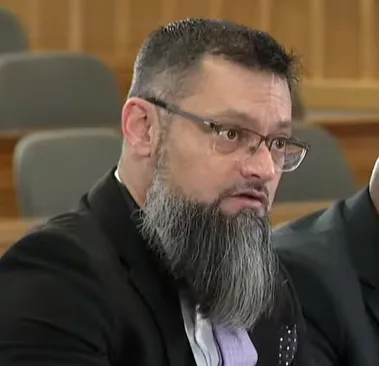
Commission sitting
The heaviest day left on the calendar arrived and neither of the two men it was set down for was in the room. Dismissed Major-General Feroz Khan, the former deputy head of SAPS Crime Intelligence, was under a subpoena that the 1 September ruling had already moved once to this date, and he did not appear; his legal representative, Mr Vally, applied on Sunday night for another month, arguing from psychological reports that his client should testify virtually from a familiar environment so that there are no triggers. Chairperson Justice Mbuyiseli Madlanga refused it and went further. Per the Daily Maverick, Business Day, SABC News and The Citizen he held that 'his non-appearance today is a flagrant disregard of a subpoena by this commission' and directed the commission's secretary, Dr Nolitha Vukuza, to lay criminal charges against Khan for failing to attend, after evidence leader Advocate Adila Hassim SC submitted that the non-attendance was in defiance of the subpoena and should go to the National Prosecuting Authority. Per Business Day the Commissions Act makes it an offence for a person summoned to fail to attend without sufficient cause, carrying a fine of up to R1,093 or up to six months' imprisonment, or both. Part of Khan's evidence may still be heard on 6 October if the evidence leaders' pending in camera application succeeds. The afternoon went to the other absent man. Oupa 'Bafana' Sindane lost his urgent bid in the Gauteng High Court in Pretoria to stop the commission using WhatsApp messages taken off his phone: per News24 it was struck from the roll with punitive costs. Chief evidence leader Advocate Matthew Chaskalson SC then did what the 25 September ruling permitted and led the messages into the record without him, putting up exchanges the evidence leaders read as what Chaskalson called an extortion racket enforced with threats of violence: a monthly R100,000 demanded from a businessman holding a Sanral contract on the Moloto road, legal fees funded for men convicted in taxi killings, and messages about Vusimuzi 'Cat' Matlala forwarded around after his arrest. Nothing on this page is a finding. Neither man has given evidence, both deny the criminal charges they face, no court has convicted either of them, and both are presumed innocent.