Madlanga Commission hearing record
Day 125 of the Madlanga Commission
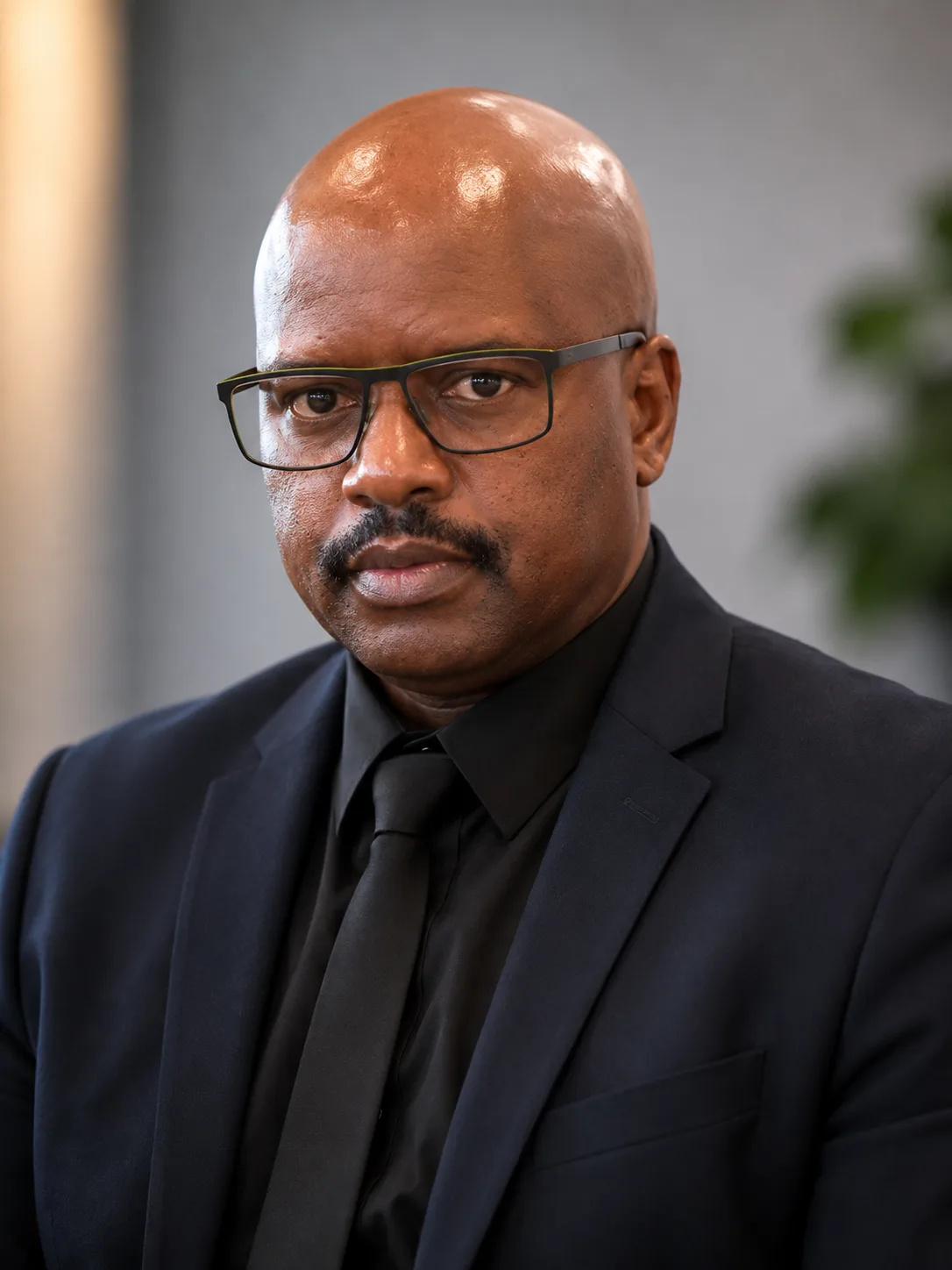
Witness: Julius Mkhwanazi
Evidence led by Advocate Mahlape Sello SC
Julius Mkhwanazi returns to answer Witness K, asks for time to consult, insists the Killarney raid was a lawful joint operation - and then walks into a contradiction over whether he even knows her.
The day in brief
What you need to know
- Suspended EMPD deputy chief Julius Mkhwanazi returned to the commission to respond to Witness K's evidence that he masterminded the alleged R14.9m Killarney precious-stones theft.
- He asked for time to consult his legal team and declined to answer the precious-stones claims in detail, saying he had been preparing for his disciplinary hearing and had not studied her transcripts.
- He maintained that the Killarney operation was a legitimate joint EMPD and JMPD seizure rather than a theft.
- The commission confronted a contradiction: in his 15 April 2026 testimony he had denied knowing Witness K, but he now confirmed that he does know her.
- Commissioner Sandile Khumalo put it to him that he was therefore either untruthful in April or untruthful now.
- Mkhwanazi suggested he may have misunderstood the earlier question about whether he knew her.
- He denies wrongdoing and is presumed innocent; all allegations remain untested.
Full coverage
The day, in depth
Asking for time
Mkhwanazi opened by asking the commission for time to consult his legal team, saying he had been focused on preparing for his disciplinary hearing and had not studied Witness K's transcripts. On that basis he declined to engage the detail of the precious-stones allegations, a position that is his right but that left her account largely unanswered for the day.
A lawful operation, not a theft
Where he did engage, Mkhwanazi held to a single line of defence: the Killarney operation was a legitimate joint EMPD and JMPD seizure, not a staged raid to steal stones. That squarely joins issue with Witness K, who told the commission the intention from the outset was theft dressed up with a falsified SAPS seizure form.
The contradiction
The pivotal moment came when the commission held his current evidence against his 15 April 2026 appearance. Then, asked whether he knew Witness K, he had denied it; now he confirmed that he does know her. Commissioner Sandile Khumalo put it to him directly that he must therefore have been untruthful either in April or now.
The misunderstanding defence
Faced with the inconsistency, Mkhwanazi said he may have misunderstood the April question about whether he knew her. He did not resolve the tension between denying the relationship earlier and now acknowledging it while insisting the operation was above board, leaving the credibility question hanging for a later sitting.
In their words
Key moments from the record
“No, no, no.”
Our analysis
The bottom line
Declining to answer and asking for time is squarely within a witness's rights, and it would be unfair to treat silence alone as an admission. But the optics are unforgiving: a day after a self-confessed accomplice laid out names, a meeting and a money split in granular detail, the man at the centre said he had not read her evidence and would not engage it. Commissions notice when the detail runs one way and the response is a request for more time.
The knowing-her contradiction is the day's real substance and it goes to credibility rather than to the theft directly. Denying he knew Witness K in April and confirming he knows her now cannot both be true, and Commissioner Khumalo's blunt framing, untruthful then or untruthful now, is the kind of inconsistency from which a commission can draw an adverse inference even though it is not a criminal finding. The 'misunderstanding' explanation is available to him, but it will have to survive scrutiny.
The core dispute is now cleanly drawn: Witness K says a lawful-looking seizure was a staged theft, and Mkhwanazi says it was a genuine joint operation. Only testing both accounts against the documents, the seizure form, the sale and the other participants can resolve it. Until then the fair reading is that the day sharpened the credibility contest without settling it, and Mkhwanazi remains presumed innocent.
Analysis is the archive’s own comment on the public proceedings, grounded in the record above. It weighs the evidence and the process; questions of individual guilt are for the courts and the commission to decide. Everyone named is presumed innocent.
Follow the threads
Who Julius Mkhwanazi connects to
Lieutenant-General Nhlanhla Mkhwanazi
Routinely confused with the KZN commissioner; Julius Mkhwanazi is the suspended EMPD deputy chief, an entirely different person.
View profile →WhatsApp counterpart in the blue-lights evidenceMichael van Wyk
Evidence led on 22 June 2026 placed Mkhwanazi as the EMPD official van Wyk messaged about blue and red lights, EMPD branding, a draft memorandum of understanding and 'appointment cards' for a specialised unit - including an exchange the evidence leaders read as a possible bribe. Both are presumed innocent.
View profile →Named as mastermind by herWitness K
Witness K, an anonymous JMPD VIP-unit inspector who said she had a romantic relationship with Mkhwanazi, testified on 23 June 2026 that he orchestrated the alleged Killarney precious-stones theft. Untested allegations; both are presumed innocent.
View profile →Blue-lights arrangementVusimuzi 'Cat' Matlala
Evidence tied Matlala's Cat VIP Protection to a draft EMPD memorandum and 'blue lights' arrangement alongside Mkhwanazi. Untested allegations.
View profile →In the room & on the record
Counsel, the panel and sources
Evidence led by
Sources
- IOL - LIVE: Julius Mkhwanazi calls for time after Witness K's damning testimony (24 June 2026) ↗
- EWN - Madlanga Commission challenges Mkhwanazi's testimony contradictions (25 June 2026) ↗
- Mail & Guardian - EMPD deputy chief Julius Mkhwanazi orchestrated a staged raid for precious stones, Witness K says (23 June 2026) ↗
- SABC News - Madlanga Commission resumes with new witness (23 June 2026) ↗